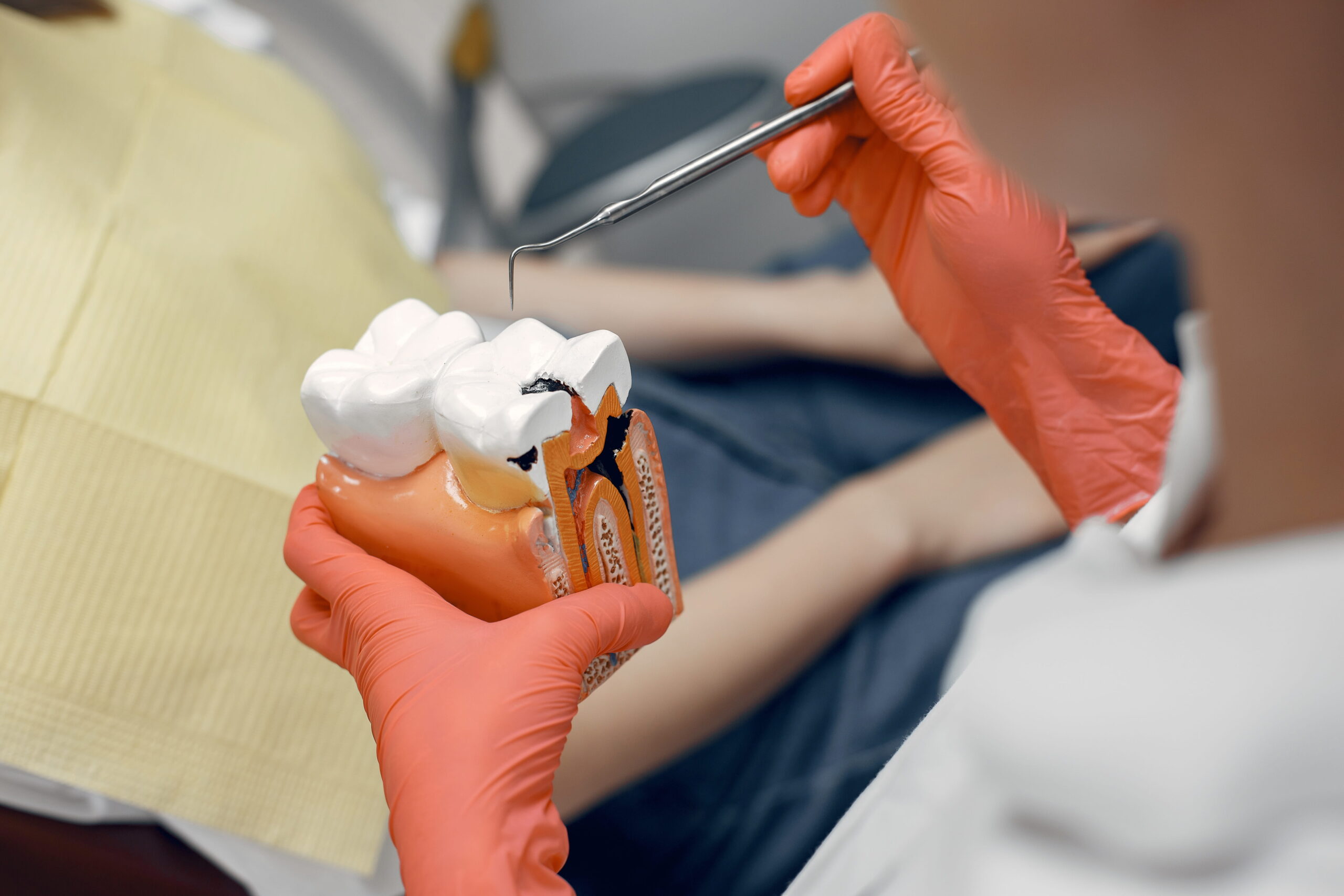
A change in tooth colour can be easy to dismiss. Teeth can become darker or yellow over time because of coffee, tea, tobacco, certain foods, aging, or inadequate oral hygiene. However, when one tooth suddenly becomes grey, brown, or noticeably darker than the teeth around it, the cause may be more than surface staining.
In some cases, tooth discolouration can indicate changes inside the tooth, including damage to the dental pulp. The pulp contains nerves and blood vessels, and injury or infection can affect the colour of the tooth. When the pulp becomes irreversibly damaged or infected, root canal therapy may be recommended to remove the affected tissue and preserve the natural tooth.
Not every discoloured tooth requires root canal treatment. The cause needs to be identified through a dental examination, patient history, and, when appropriate, dental imaging. Understanding why a tooth changes colour can help you know when it is worth getting checked.
Quick Answer: Can Tooth Discolouration Mean You Need Root Canal Therapy?
Yes, tooth discolouration can sometimes be a sign of damage or infection inside the tooth, particularly when a single tooth becomes noticeably darker without an obvious surface-staining cause.
A tooth may darken after trauma, deep decay, cracks, repeated dental procedures, or damage to the pulp. If the pulp becomes severely inflamed or dies, the tooth can gradually change colour.
However, discolouration alone does not confirm that root canal therapy is necessary. A dentist needs to determine what is causing the colour change and whether the pulp is healthy, inflamed, or infected.
If the discolouration is caused by an internal problem, root canal therapy in North York may be considered to address the damaged or infected pulp while preserving the natural tooth.
Key Takeaways
- A single darkened tooth can sometimes indicate an internal dental problem.
- Tooth trauma can cause a tooth to become grey, brown, or darker over time.
- Deep decay can damage the pulp and potentially lead to discolouration.
- Not every discoloured tooth requires root canal treatment.
- Surface stains and internal discolouration have different causes.
- Pain is not always present when the dental pulp is damaged.
- Dental examination and imaging can help determine the cause.
- Treating the underlying problem is more important than simply covering the discolouration.
- Root canal therapy may help preserve a tooth when the pulp is irreversibly damaged or infected.
- Early assessment can help prevent a developing dental problem from becoming more complicated.
What Causes a Tooth to Become Discoloured?
Tooth discolouration can occur for many reasons. Understanding the possible causes is important because treatment depends on what is happening inside or outside the tooth.
Surface Staining
Some discolouration occurs on the outside of the tooth.
Common sources include:
- Coffee
- Tea
- Red wine
- Tobacco
- Certain foods
- Plaque buildup
- Poor oral hygiene
These stains often affect multiple teeth rather than just one.
Professional cleaning or teeth whitening may help when the colour change is caused by external staining.
Natural Aging
Teeth can gradually become darker as people age. The outer enamel can become thinner, allowing the naturally yellowish dentin underneath to become more visible.
This type of colour change usually develops gradually rather than appearing suddenly in one tooth.
Dental Materials
Some fillings and other dental restorations can change in appearance over time. A tooth may also appear different from neighbouring teeth because the restoration does not have exactly the same optical properties as natural tooth structure.
Internal Tooth Changes
A more significant concern can arise when the colour change originates inside the tooth.
Damage to the pulp can sometimes cause the tooth to become darker. This is particularly important when the discolouration affects one tooth and there is no obvious explanation such as staining.
Why Can a Damaged Tooth Turn Dark?
Inside every healthy tooth is a soft tissue called dental pulp. It contains nerves, blood vessels, and connective tissue.
When the pulp is damaged, blood products and other changes within the tooth can affect its colour. Over time, the tooth may appear grey, brown, yellowish, or darker than the surrounding teeth.
This can happen following trauma, deep decay, cracks, or certain dental procedures.
The colour change may happen immediately or develop gradually. In some situations, the tooth may become darker months or even years after an injury.
This is one reason why an unexplained colour change should not automatically be treated as a cosmetic issue.
Can Tooth Trauma Cause Discolouration?
Yes. Dental trauma is one possible reason for a tooth to become darker.
An injury can damage the blood supply or pulp inside the tooth. This may happen after:
- A fall
- A sports injury
- A car accident
- A blow to the face
- Biting something unexpectedly hard
- An accident affecting the front teeth
A tooth can initially appear normal after an injury and then change colour later.
This does not necessarily mean the tooth needs immediate root canal treatment. The dentist needs to evaluate the tooth and determine whether the pulp remains healthy or has experienced irreversible damage.
How Deep Decay Can Affect Tooth Colour
Tooth decay begins in the outer layers of the tooth. If decay progresses far enough, it can eventually reach the pulp.
When bacteria and infection affect the pulp, the tooth may develop symptoms such as sensitivity, pain, swelling, or discomfort when biting. In some cases, however, symptoms can be minimal.
A severely damaged pulp may also contribute to internal discolouration.
This is why a darkened tooth accompanied by a large cavity deserves professional attention. Simply whitening the tooth may not address the underlying problem.
Does a Discoloured Tooth Always Need Root Canal Treatment?
No. This is an important distinction.
A tooth can become discoloured for many reasons, and root canal treatment is only appropriate when the dental pulp has been affected in a way that requires treatment.
For example, a tooth with surface staining may benefit from professional cleaning or whitening. A tooth with a cosmetic restoration may need restoration replacement or another cosmetic solution.
On the other hand, if examination indicates that the pulp is irreversibly inflamed or infected, root canal therapy may be recommended.
The dentist’s diagnosis is therefore more important than the colour alone.
What Other Signs Should You Watch For?
Discolouration becomes more concerning when it occurs alongside other symptoms.
Persistent Tooth Pain
Pain that continues or becomes worse may indicate inflammation or infection.
Sensitivity to Hot or Cold
Some pulp problems can cause prolonged sensitivity, particularly after exposure to hot or cold foods and drinks.
Pain When Biting
Discomfort when chewing or biting can sometimes indicate inflammation around the tooth.
Swelling
Swelling around the tooth or gum can be associated with dental infection and should be assessed promptly.
Gum Changes
A pimple-like bump, tenderness, redness, or swelling near a tooth can be another reason to seek dental evaluation.
Previous Dental Trauma
If a discoloured tooth has previously experienced an injury, tell your dentist. This information can be important when determining the cause.
It is also possible to have pulp damage without significant pain. Therefore, the absence of discomfort does not always mean that a darkened tooth is healthy.
How Does a Dentist Determine the Cause?
A dentist does not diagnose the cause of discolouration simply by looking at the tooth. The evaluation may include several steps.
Dental History
Your dentist may ask when you first noticed the colour change and whether the tooth has previously been injured or treated.
Information about pain, sensitivity, dental procedures, and changes over time can also be useful.
Clinical Examination
The dentist can examine the tooth, surrounding gums, existing restorations, and signs of decay or damage.
Pulp Testing
Depending on the situation, the dentist may perform tests to assess how the pulp responds to different stimuli.
These tests can provide information about the condition of the tooth’s nerve and pulp.
Dental X-Rays
Dental imaging can help identify decay, changes around the root, bone abnormalities, previous treatment, or other issues that may not be visible during a routine examination.
Together, these findings help the dentist determine whether the discolouration is cosmetic or related to an underlying dental problem.
What Happens During Root Canal Therapy?
If the pulp is severely damaged or infected and root canal treatment is recommended, the goal is to remove the affected pulp and clean the inside of the tooth.
The general process involves:
- Numbing the tooth and surrounding area.
- Creating access to the inside of the tooth.
- Removing damaged or infected pulp tissue.
- Cleaning and disinfecting the root canals.
- Shaping the canals so they can be properly sealed.
- Filling and sealing the cleaned canals.
- Restoring the tooth to help protect it and restore its function.
The exact treatment approach depends on the tooth and the complexity of the case.
The purpose of root canal therapy is not simply to improve tooth colour. Its primary purpose is to treat the internal dental problem and preserve the natural tooth when possible.
What Happens to the Discolouration After Root Canal Treatment?
Treating the infected or damaged pulp does not necessarily make the tooth immediately return to its original colour.
If a tooth has become dark because of internal changes, additional cosmetic treatment may sometimes be considered after the underlying dental problem has been addressed.
Depending on the circumstances, a dentist may discuss options such as internal or external whitening, bonding, veneers, or a crown.
The appropriate choice depends on the amount of remaining tooth structure, the cause of the discolouration, the condition of the tooth, and the desired cosmetic result.
It is generally important to address the health of the tooth before focusing solely on its appearance.
Why Early Evaluation Can Be Important
A discoloured tooth does not necessarily represent an emergency. However, ignoring an unexplained colour change for a long time can allow an underlying dental problem to progress.
If decay, infection, or structural damage is responsible, delaying assessment may result in more extensive damage.
Early evaluation gives your dentist an opportunity to determine what is happening and explain the available treatment options.
This can be particularly important when the tooth has experienced previous trauma or has undergone extensive dental work.
Can a Discoloured Tooth Be Saved?
In many cases, a tooth affected by pulp damage can potentially be preserved with appropriate treatment.
One of the major advantages of root canal therapy is that it can allow a dentist to treat the inside of a tooth while keeping the natural tooth in place.
Whether a tooth can be saved depends on factors such as:
- Amount of healthy tooth structure remaining
- Severity of decay
- Presence of cracks
- Condition of the surrounding bone and gums
- Extent of infection
- Previous dental treatment
- Overall restorability of the tooth
Your dentist can evaluate these factors before recommending treatment.
Frequently Asked Questions
Is a dark tooth always infected?
No. A dark tooth can result from staining, aging, dental restorations, trauma, or internal changes. A dental examination is needed to determine the cause.
Can a tooth need root canal therapy without hurting?
Yes. Some teeth with significant pulp damage may not cause obvious pain. A change in colour, particularly after trauma, can be a reason to have the tooth evaluated.
Can an old injury cause tooth discolouration years later?
Yes. Some teeth can develop colour changes long after an injury. If a previously injured tooth begins to darken, it is worth having it examined.
Is root canal therapy painful?
Modern dental techniques and local anaesthesia are used to keep patients comfortable during treatment. Your dentist can explain what to expect based on your individual condition.
What happens if I ignore a discoloured tooth?
If the colour change is caused by an underlying dental problem, delaying assessment could allow the condition to progress. An examination can help determine whether treatment is necessary.
Can root canal therapy save a discoloured tooth?
If the discolouration is related to damaged or infected pulp and the tooth is otherwise restorable, root canal treatment may help preserve the natural tooth.
Final Thoughts
A discoloured tooth is not always a sign of a serious dental problem, but a sudden or unexplained change in the colour of one tooth should not automatically be considered cosmetic.
Pay particular attention if a darkened tooth is accompanied by pain, sensitivity, swelling, discomfort when biting, or a history of dental trauma. Even without symptoms, an unexplained colour change can be a good reason to schedule an examination.
If your dentist determines that the pulp is damaged or infected, root canal therapy in North York may be one option for treating the problem while preserving the natural tooth. The sooner the cause is identified, the more clearly your dentist can explain the appropriate treatment and cosmetic options.
Dandon Dental provides personalized dental care using modern digital technology and comprehensive treatment options for patients in North York. Book a consultation to have a discoloured or painful tooth professionally evaluated.